Caregivers, Rockstars & Superheroes

ā€œFamily is not an important thing. It’s everything.ā€ -Michael J. Fox

I recently read a post on Twitter that November is National Family Caregivers Month (US) where appreciation and thanks are given to those who care for their family members with illnesses. We have a similar thing here in Canada in May. Regardless of the day, month, or year, I felt compelled to acknowledge Garth (my husband) as the Rockstar, Superhero, Caregiver in my life!

While I am not yet at a stage, where significant caregiving is required, we both know where Parkinson’s leads, and I feel I can say confidently that he is up for the challenge!

Parkinson’s is my disease, but in a way, it has become his as well.

From the day of my diagnosis, he has involved himself in learning all that he can about Parkinson’s Disease, has joined me for my MDS (movement disorders specialist) appointments, and attended conferences with me. And in the day to day activities of life, Garth makes sure the front walkway is clear of ice/snow, reminds me to look where I’m walking to avoid falls, cooks me healthy meals, calms me from those vivid ā€˜scream out’ dreams (that’ll be a future blog post…), as well a million other things required to manage our household. Throughout the COVID-19 pandemic, he has diligently kept our family safe and continues to do so. Much of this is fueled by his concern for my health and complications that could occur should I contract the virus.

When I fell and broke my leg in June, he managed everything.

Caregivers are the ā€˜behind the scenes’ or ā€˜backstage’ crew that truly make the whole production work. At times, I’m sure it feels as though an Ironman suit would help, but he doesn’t need it. And although he deserves the applause and cheering heard at a Pearl Jam concert (his favourite band), he doesn’t expect it!

He’s just doing his thing and he’s very good at it! I’m so lucky!

I guess one of the good things about Parkinson’s is that progression (at least in my case) moves slowly which offers both of us the time to adjust to our roles as caregiver and care-receiver! Care-receiving is a strange thing (another future blog post). I have three sons whose roles are quietly evolving into that of ā€˜caregiver’ – but I’m not quite prepared to write about this developing role-reversal just yet. I try not to get too far ahead of myself!

Today I just say, ā€œThank you Garth!ā€

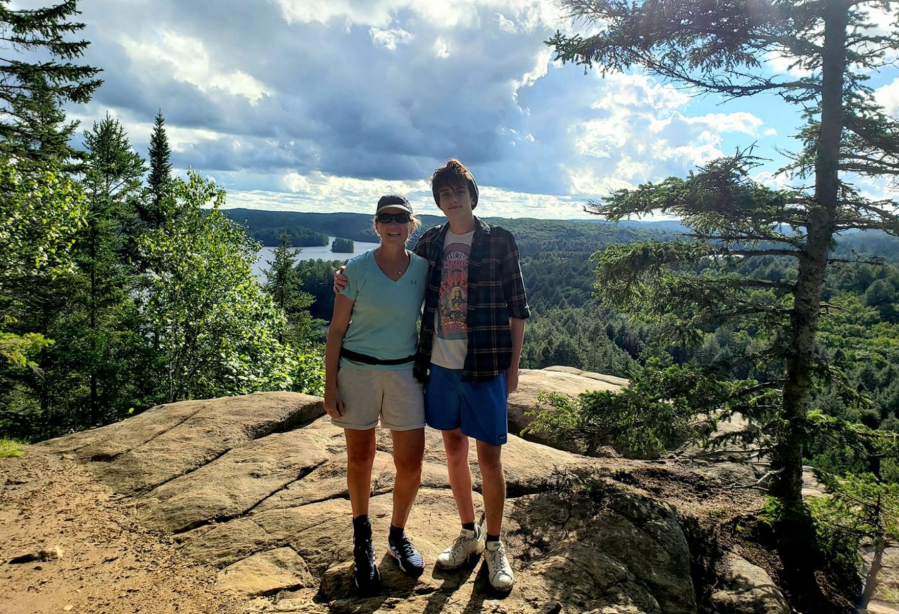
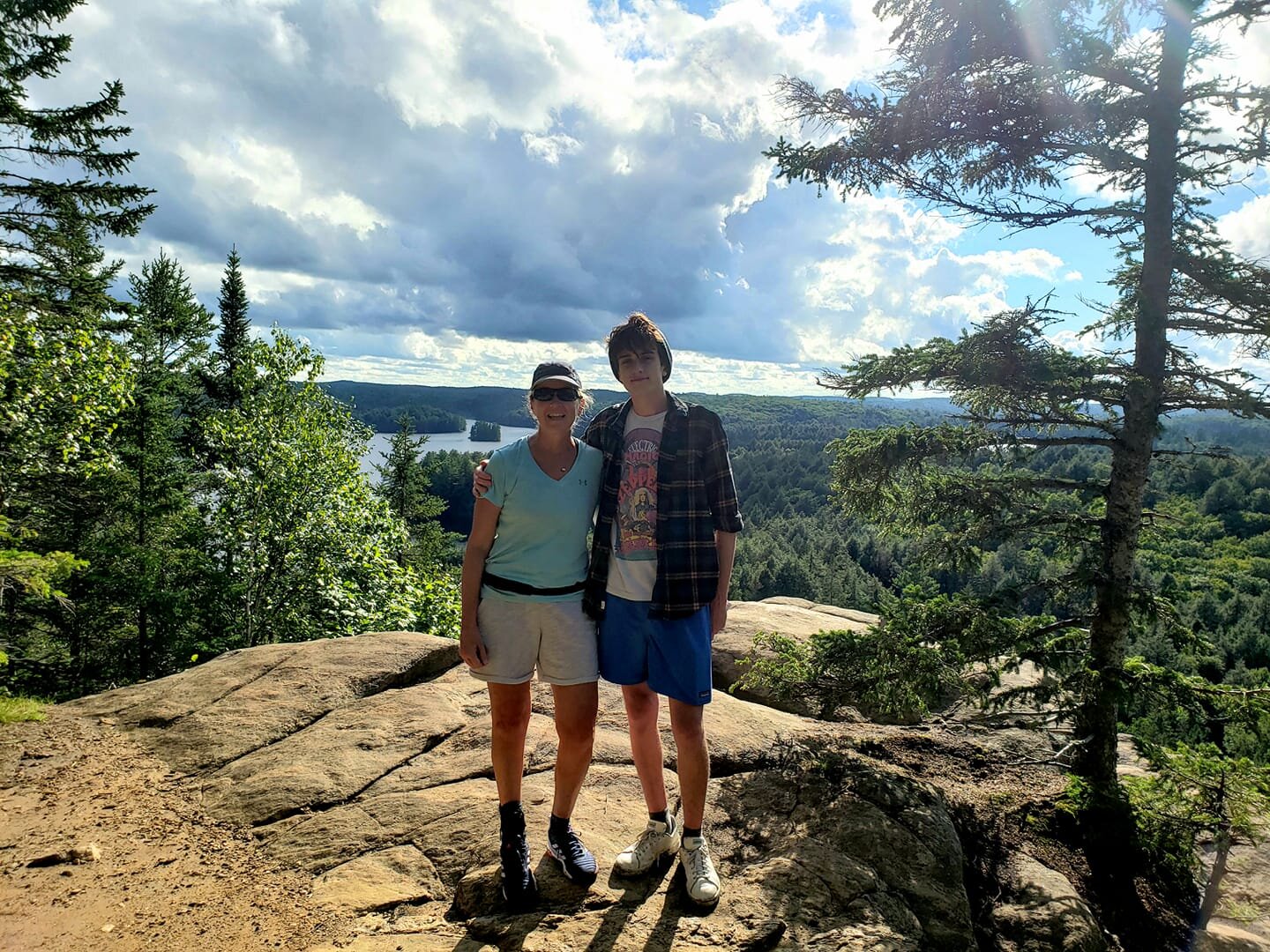
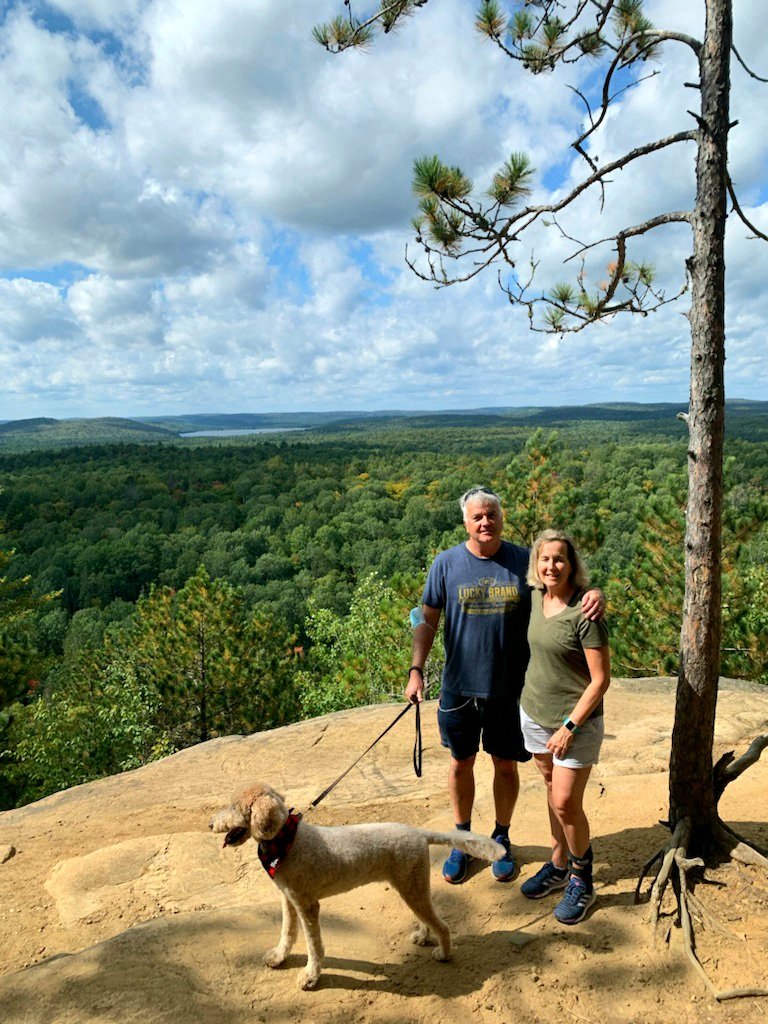
*This pic was taken 3 months after I broke my leg. The trek down was challenging for me but Garth made sure I got there safely by letting me lean on him, both literally and figuratively.
Ā 

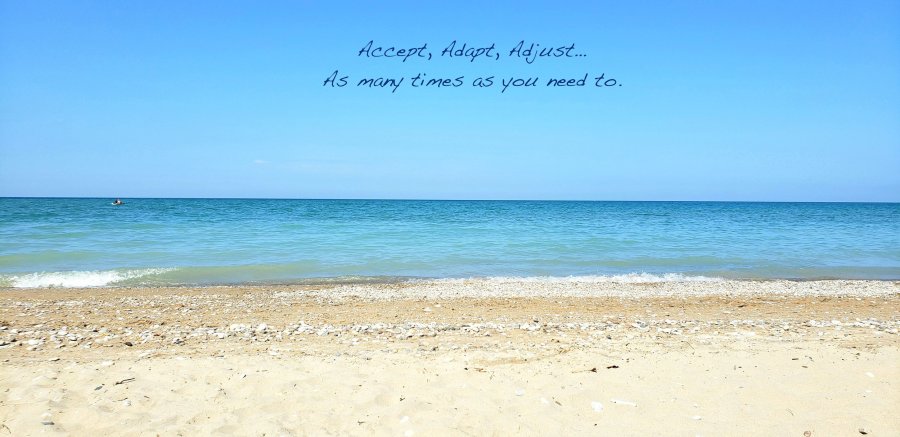
Accept. Adapt. Adjust.

When you live with a chronic progressive condition, like Parkinson’s Disease, you need to be flexible. I just had a little giggle as I chose to use the word ā€˜flexible’ because in a physical sense, I would certainly not describe my body as ā€˜flexible!’ The stiffness and rigidity that PD has given me have left me feeling just the opposite!

But I think it is important that my mind, my attitude, and my heart should remain flexible through the course of this disease, as it is too easy to feel stuck or confined to living with the symptoms.

Accept limitations. Adapt to situations. Adjust expectations.

Accept that my left foot can no longer operate in anything but closed-toe shoes. Adapt by switching out footwear. Adjust to wearing closed-toe water sandals at the beach – ugh.

Accept that my osteoporosis leg bones won’t support the impact of running. Adapt by choosing to walk instead. Adjust to trying to achieve the ā€œrunner’s highā€ on my elliptical trainer!

Accept that I often choke on certain foods. Adapt by cutting food into smaller pieces and chewing longer. Adjust to not eating certain culprits!

Accept that sleep is difficult. Adapt by trying a million different things to improve it. Adjust…well that hasn’t happened yet. But I’ll keep trying to figure that one out!

Developing Dyskinesia?

Which comes first – the symptom or the med?

In my four + years with Parkinson’s Disease, I have strived to maintain the lowest dose of Levodopa to help with treating symptoms. (*important to know that Levodopa is not a treatment for the disease, just an artificial dopamine hit that helps keep some symptoms under control). Over time, Levodopa loses effectiveness and the dosage will need to be upped. Sadly, increased Levodopa also produces undesirable side effects; Dyskinesia – long-term effect of Levodopa.

ā€œThe features of dyskinesia include rapid, involuntary, and uncontrollable movements other than tremor that present as body swaying, writhing (continual twisting, squirming, or contortions of the body), arm flailing, fidgeting, or head bobbing.ā€

I’m beginning to see emerging signs of Dyskinesia. Although this is to be expected, I’m not ready to go there.

OR…it could be a side effect of a new medication that my neurologist prescribed to support the transport of the artificial dopamine to my brain. She started me on Azilect (Rasagiline) a month ago because I was on the couch with a broken leg and lacking the natural dopamine that exercise had been giving me. Of course, there are side effects to that med as well; Rasagiline Side Effects, which include; worsening muscle stiffness/twitching/uncontrollable movements. Kinda sounds like Dyskinesia…

Either way – I don’t like it. Time for a chat with my neurologist.

Exercise is Medicine #2

“Lack of activity destroys the good conditionĀ of every human being, while movement and methodical physical exercise save it and preserve it” – Plato.

In June of 2021, I came to realize how true this statement really is.

Just days after breaking my leg, I saw my PD symptoms worsen. My tremor (which is not normally a huge deal) got a little edgier. I felt the time between PD meds was seemingly longer than normal. I take a low dose of Levodopa 4x/day. I normally rely on a phone app to remind me to take them, but the increased tremor between meds has become a new and super annoying alarm. This, along with increased rigidity, muscle tightness, stiffness, and lack of sleep are all creating a little havoc.

Without being able to do my daily exercise activities, I am at a loss for the natural dopamine boost that these activities provide. Chair exercises and hand weights are fine, but they just don’t provide me with the bursts of cardio that I need to fuel my brain. I am more than halfway through the 7-8 week healing window and I can’t wait until I can bike, row, walk, paddle, hike, etc.

I can honestly say that my own informal study, on the positive effects of exercise on my own PD symptom management, is 100% reliable and valid! If you want some other research to back up my claim, you can read it in the links below.

Exercise is medicine! For real!

Exercise ā€˜Rewires’ the Brain

Neuroprotective Benefits of Exercise

Aerobic Exercise: Evidence for a Direct Brain Effect to Slow Parkinson Disease Progression

Why exercise slows the progression of Parkinson’s disease

Managing Early Onset Parkinson’s Disease with Excercise

Falling From Grace

grace (ɔrās): n. simple elegance or refinement of movement

Last week, Garth and I set out for a hike in Algonquin Park. The Whiskey Rapids trail was a little wet, warm, and wrought with mosquitoes! Even with bug spray, we were getting swarmed, so we moved rather quickly along the trail.

I was so careful with my footing given that PD interferes with my balance, Dystonia causes my left foot to drag, and Osteoporosis makes me a great candidate for breaking bones. I had my eyes on the ground scouting for tree roots and rocks. I’ll repeat, I was so careful.

Within 30m of the trail’s end, I spotted some hikers just starting out. I took my eyes off the path to look for them and to warn them about the mayhem of mosquitos. I briefly lost my focus.

My left foot hit a root. I heard the snap. I was on the ground.

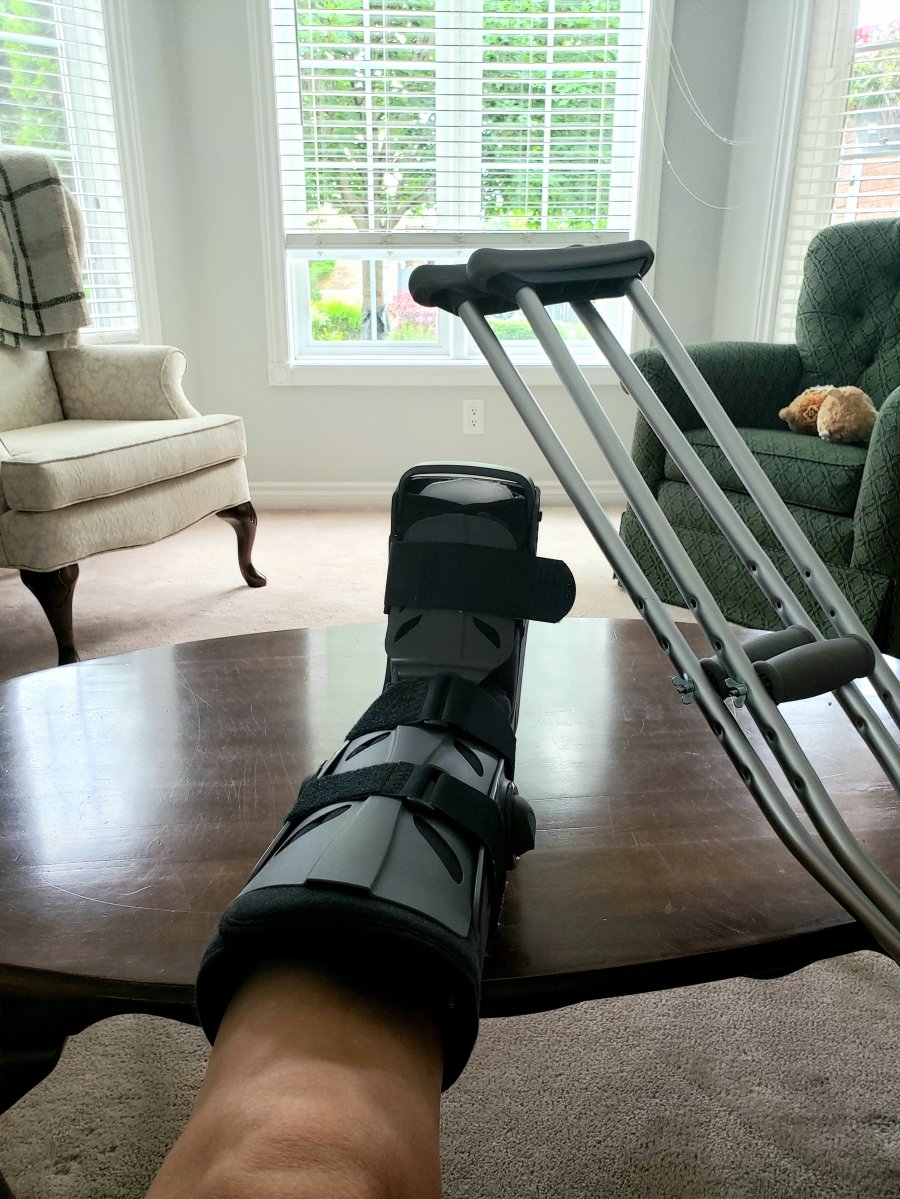
Broke my left distal fibula (leg). Now, I’m on the couch in a boot cast navigating my small indoor world with crutches. I’ll just say that Parkinson’s and crutches don’t necessarily get along well and I’m back to paying very close attention to the paths I travel throughout my home.

Note to self: Our next house will be a bungalow!!

Thanks to Garth for listening patiently to my emotional, explicative-laden attack aimed at my balance, my bones, and this stupid movement disorder that has stolen my grace.

4 Years Later

Today, May 5th, 2021 marks 4 years since I sat in the Neurologist’s office and heard those words, ā€œWell, I think I can say that you have Parkinson’s Disease.ā€

Looking back, I have never felt as terrible as I did prior to that day!

Before my diagnosis, I was having unbearable shoulder pain, crazy rigidity/stiffness, urinary incontinence (which meant carefully timed planning for proximity to washrooms), a tremor that I was unsuccessfully trying to control and conceal, my handwriting was illegible, my words were soft, slurred, and often unretrievable, I choked regularly on food/liquid, and I was working under extremely stressful conditions as a VP at a high-needs school.

But although this disease continues to progress while presenting new and unwelcome challenges, I actually feel better now than I did then.

Medication has eased the tremor, improved handwriting, and reduced urinary urgency.

Physiotherapy and Osteopathy treatments help with my shoulder and other PD-related pain.

A Naturopath has prescribed supplements to reduce inflammation.

Speech Therapy and a Swallowing Assessment have offered strategies that help reduce choking and improve vocal volume.

Daily exercise and dietary changes improve everything!

And leaving my job, although a difficult event to accept, removed the stress that was making all of my symptoms worse and provided me with much-needed time to practice self-care.

So finally receiving a PD diagnosis, that explained the reason for all of these symptoms, provided a weird kind of relief and an opportunity to focus on a path forward.

Don’t get me wrong, Parkinson’s sucks (for lack of a better term). There are some really tough days (and nights) and I know that things will continue to become more difficult over time – PD is famous for this – but for today I will mark the anniversary by acknowledging all that I have learned about my brain and the efforts that I have undertaken to slow this train down.

ā€œDiagnosis is not the end, but the beginning of practiceā€ Martin H. Fischer

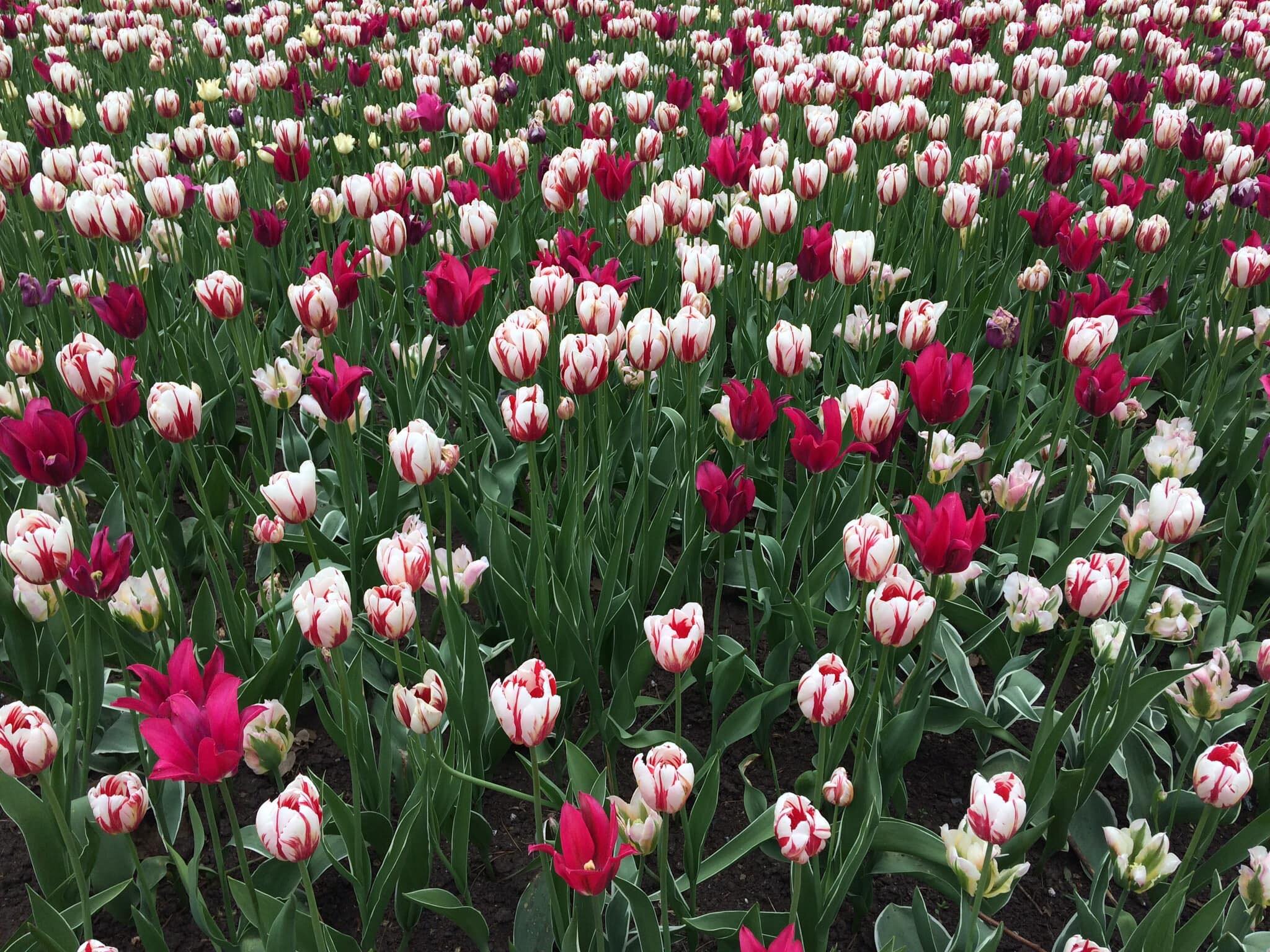
The Tulips at Dow’s Lake, Ottawa, Canada(The red and white tulip is the symbol of Parkinson’t Disease)Photo Credit: P. Dunlap (thanks Pete!)The Tulips at Dow’s Lake, Ottawa, Canada

(The red and white tulip is the symbol of Parkinson’t Disease)

Photo Credit: P. Dunlap (thanks Pete!)

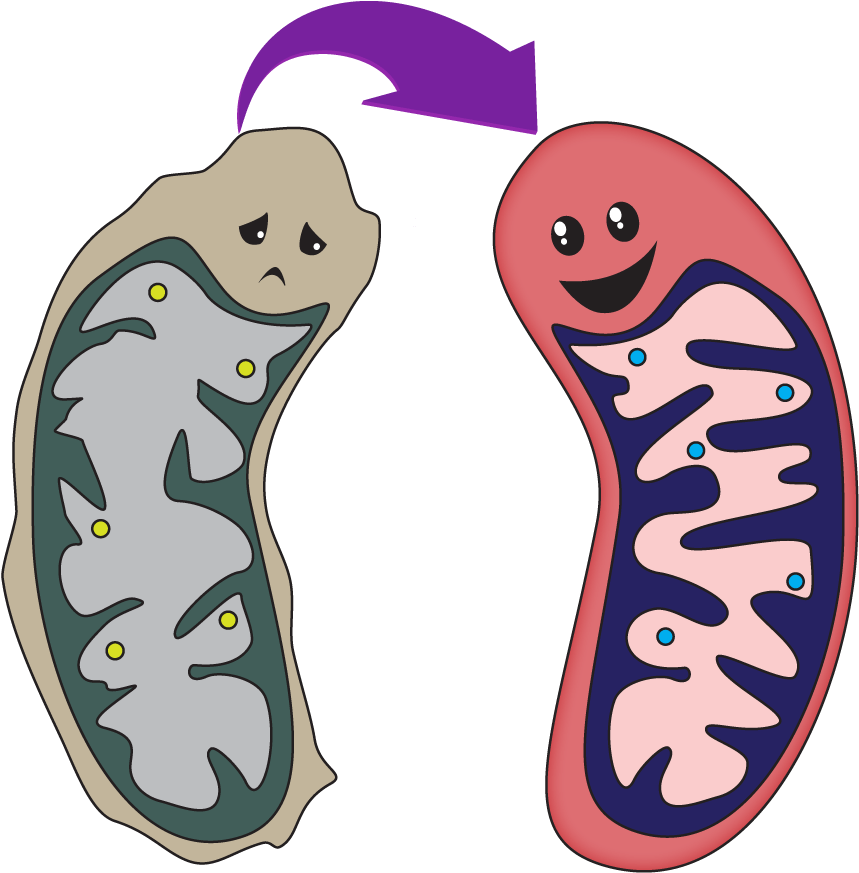
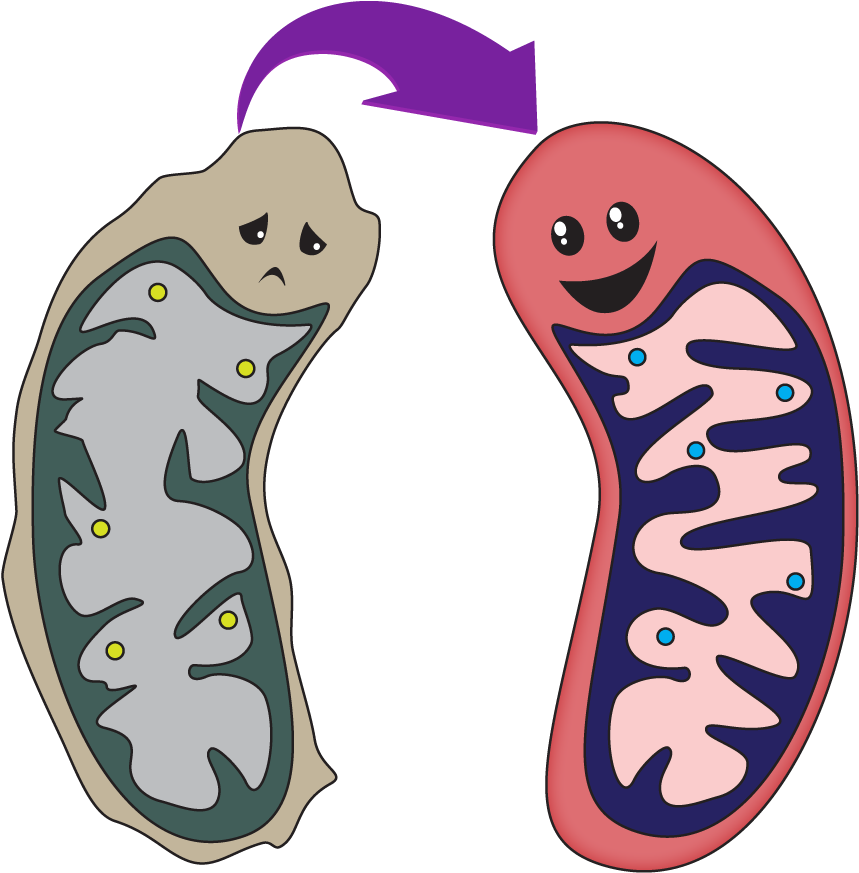
Managing your Mitochondria

ā€œNeurons giveth and neurons taketh awayā€ Abhijit Naskar

Since my diagnosis, I have learned so much about my brain. I’m embarrassed to admit that I never ever paid attention to the care that it needs over a lifetime so I’m sharing this now with the hope that if you are reading it, you will take it to heart….or take it to brain!

The following article explains it much better than I ever could Dr. Frank Lipman MD on Mitochondrial Health

Based on the knowledge that I have acquired;

  • I practice intermittent fasting; no eating between 8pm and 12 noon.

  • The first thing that I eat every day is an avocado which contains the healthy fat needed to feed my mitochondria and get them off to a great start.

  • I take a few supplements (based on testing done with my naturopath) like Omega 3 oil, MCT oil, and others aimed at boosting the production and improving the pathway of glutathione.

  • I spend time in the sun (my first love!) in healthy quantities and at optimal times of the day, but I have to be very careful due to the increased risk of skin cancer in people with PD.

  • I am trying desperately to get better sleep – although this is not something that I have obtained yet – I keep a sleep diary to help pinpoint what works and what doesn’t.

  • I exercise daily. Elliptical trainer, spin bike, rower, weights. And I walk my dog.

  • I do yoga and try really hard to meditate, but it is crazy-difficult to calm my brain.

  • Finally, (and this is the hardest part) I am trying to reduce/eliminate processed/refined sugar.

    I’ve gone weeks and even months without sugar, but it always manages to creep back into my diet. I love chocolate so I try to only eat the really dark kind, but I am weak! I love that cheesy/caramel popcorn. I love cookies. I love pie. I love cake. I love alcohol.

    But they don’t love me back. Before I reach for a mitochondrial menace, I ask myself; ā€œWhat is this doing to your brain?ā€

    Sometimes, I put it back.

    Other times I say ā€œWhat the heckā€

    I am currently in the middle of Easter weekend surrounded by temptation and treats – I’ll get back on track this week!

Puzzles, Pandemics & Parkinson’s

“Even the hardest puzzles have solutions.” – Unknown

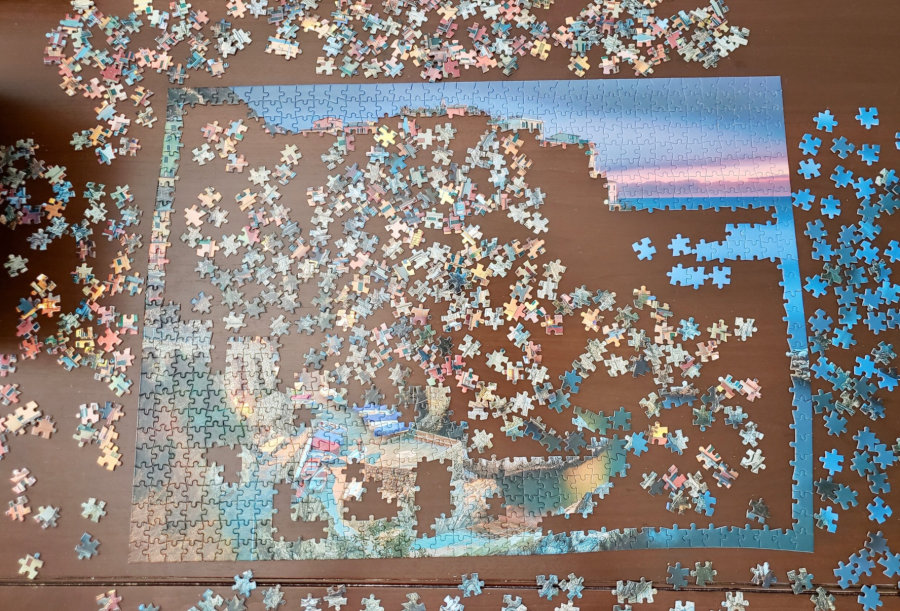
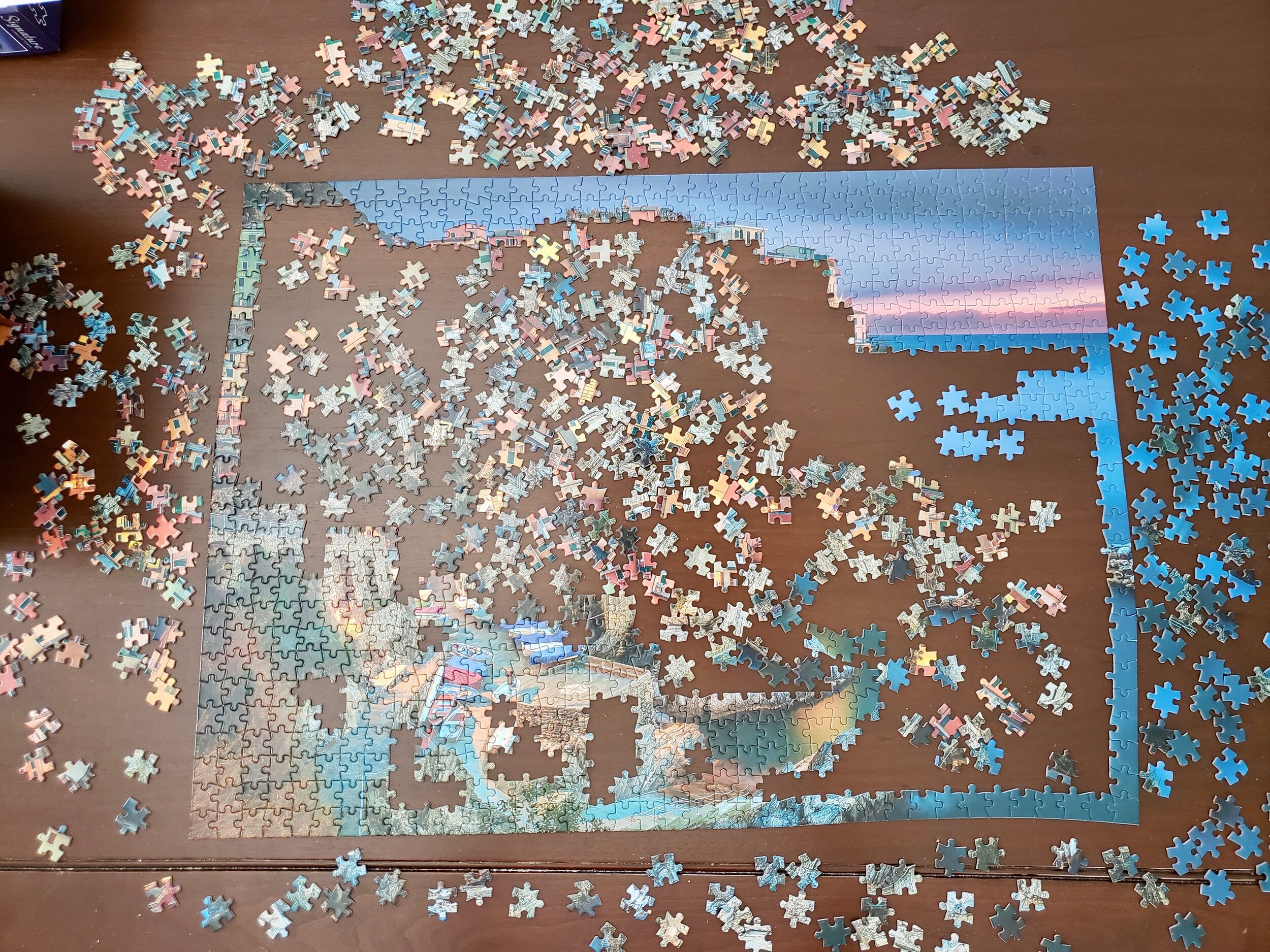
Since the Covid-19 pandemic began a year ago, I have spent countless hours assembling puzzles. I’m not sure how many I’ve finished – too many to count at this point. I get so much joy and satisfaction working on completing scenes ranging from cityscapes to countrysides to underwater dogs…yes that’s correct!

I follow the ā€˜stay at home’ orders and ā€˜lockdown’ rules and I remain dedicated to my own personal goal of not getting or giving anyone this virus. Puzzles have been an amusing time-filler. But why am I so consumed with puzzles?

Puzzles are predictable. I like that.

Eventually, you find the answers to where every piece fits, and you are rewarded with a complete picture. This is the opposite of living with Parkinson’s Disease.

Every day is unpredictable.

There are no consistent answers. There is no complete picture. No cure. No cause (in my case).

I spend so much time tracking what works (diet, supplements, meds, exercise, etc.) to alleviate my symptoms (pain, tremor, stiffness, balance, constipation (there.. I said it!), insomnia, apathy, fatigue, speech, etc). What seems effective one day, is useless the next. There is no perfect combination of treatments to solve all that is Parkinson’s.

It feels like I am desperately trying to put together the pieces of a puzzle that is constantly evolving. Just when I think I’ve found the spot for a particular piece, the shape changes.

But even the hardest puzzle has a solution – hopefully somebody solves the Parkinson’s puzzle soon.

I’ll keep working on the Cinque Terre, Italy for now.


20210304_103833 2.jpg

Ā 

Ā 

Ā 

Ā 

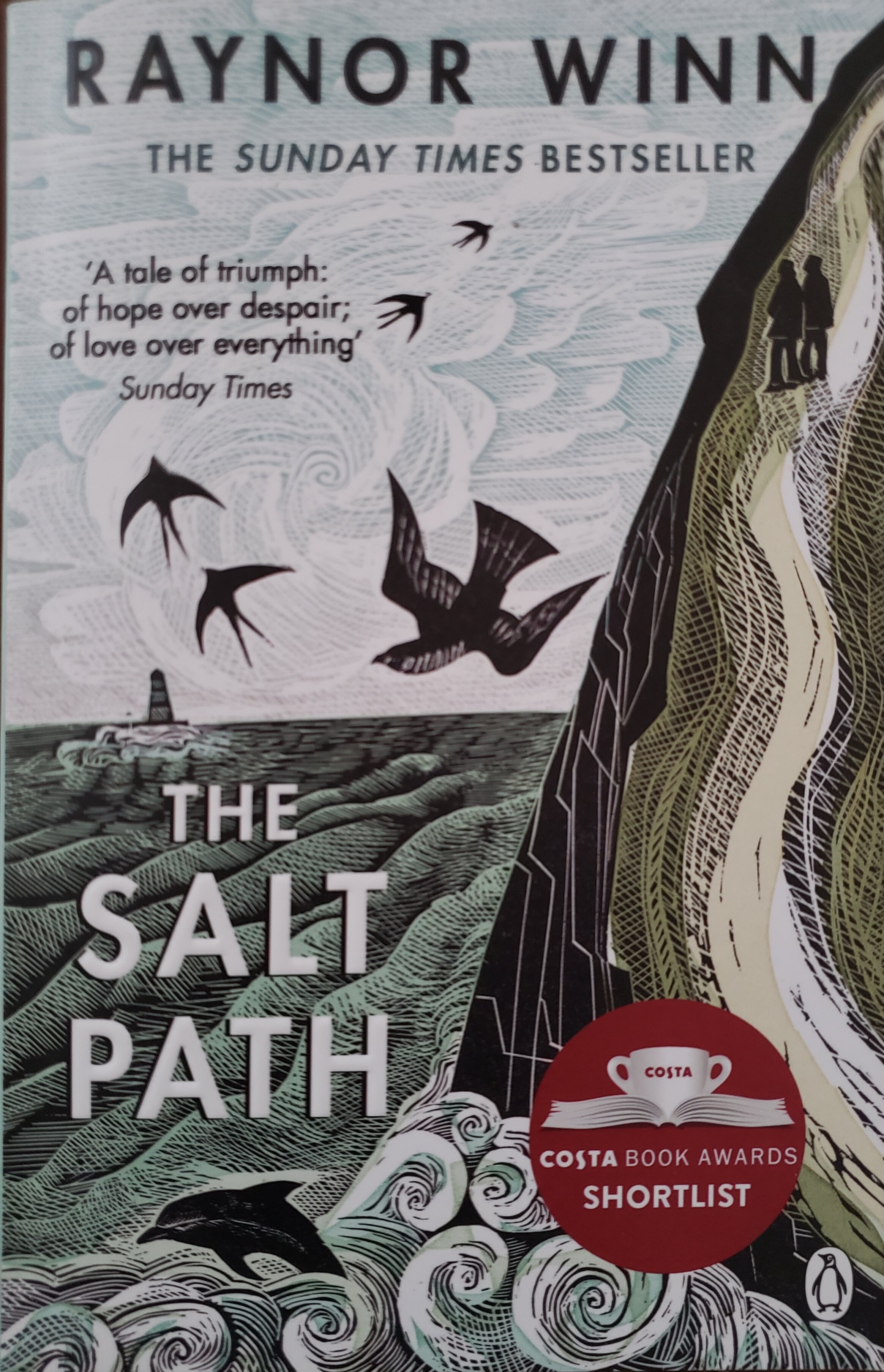
The Salt Path

ā€œA new season had crept into me, a softer season of acceptance.” Raynor Winn

The Salt Path by Raynor Winn is a beautiful recount and reflection upon a couple’s journey through life’s unplanned events. Coping with a devastating diagnosis (CBD Corticobasal Degeneration), financial ruin, and homelessness, Raynor and her husband Moth set off on a 630-mile trek along the South West Coastal Path from Somerset to Dorset, UK. Somewhat unprepared and financially strapped, the pair are destined for adventures both devastating and wonderful.

It speaks to the incredible value found in; (and it’s all free of charge) spending time in nature, being physically active/pushing physical limits, reflecting/being mindful, and most importantly, appreciating the love we share.

I won’t provide any further details because I would like to recommend you read it, especially if you are dealing with any life-changing events of your own.

For me, this was a book of hope.

ā€œA new season had crept into me, a softer season of acceptance. Burnt in by the sun, driven in by the storms. I could feel the sky, the earth, the water and revel in being part of the elements without a chasm of pain opening at the thought of the loss of our place within it all.ā€ – Raynor Winn, The Salt Path

Planning an overseas trip to Cornwall in 2022 (should Covid 19 be behind us) and I hope to cover some of the same parts of the Path that they travelled!

Looking forward to the follow-up; The Wild Silence


The Salt Path.jpg

Ā 

Ā 

Ā 

Ā 

Apathy

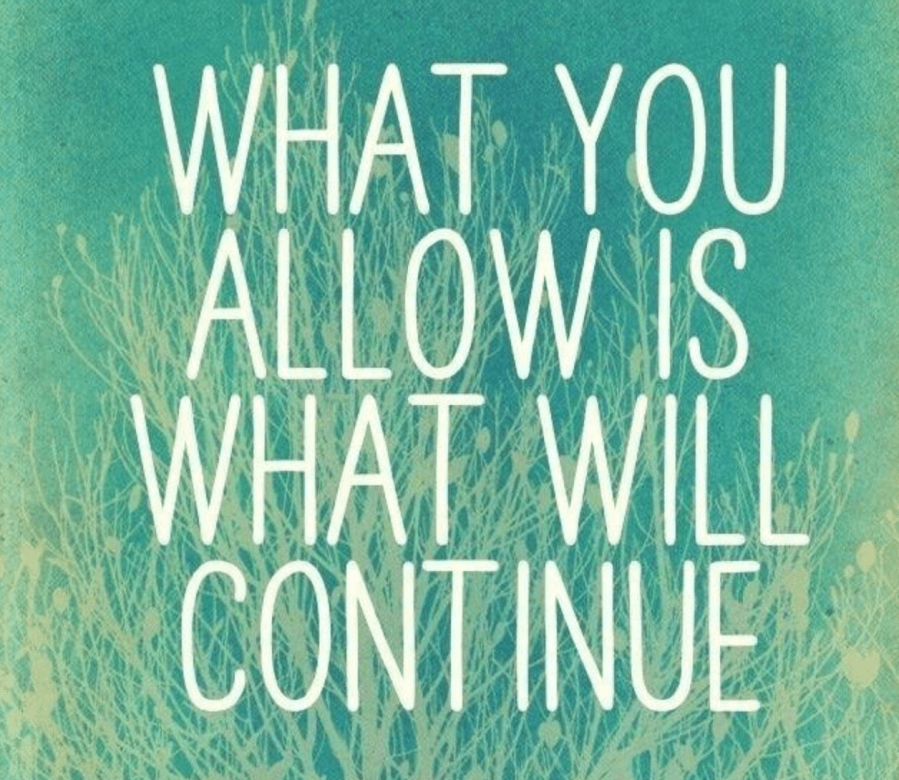
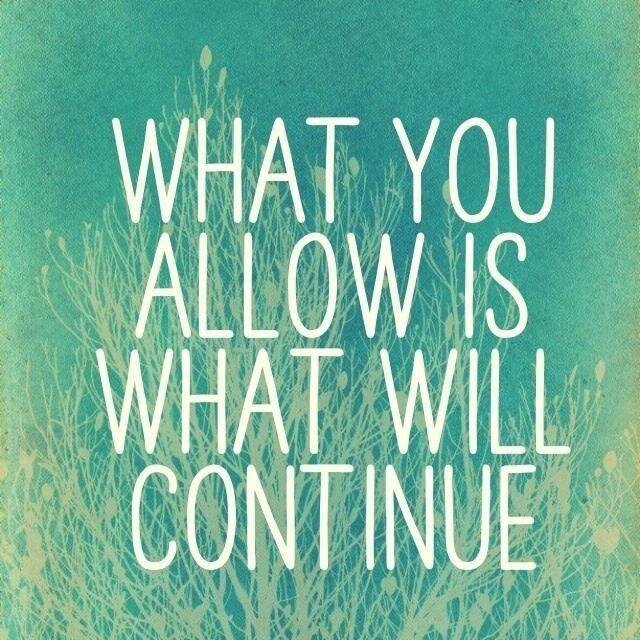
“What you allow is what will continue” – Unknown

Prior to my diagnosis, I got things done. I made lists. And I checked things off of those lists. I had innate drive, ambition, and I set goals.

The Parkinson’s-associated symptom of apathy is one of the hardest things that I have had to adjust to lately. In fact, I’ve been putting off writing this post because of this unfamiliar and unwelcome feeling of indifference or lassitude. It is hard for me to comprehend how/why this has happened but it ā€œaffects up to 40 percent of people with Parkinson’s disease (PD) and is likely due, at least in part, to lack of the neurotransmitter (brain chemical) dopamineā€ (Michael J. Fox Foundation). Although I know this, I still struggle with my own self-imposed judgment of ā€˜just being lazy.’

Apathy is a very real problem, (Parkinson Canada – Apathy). It can worsen over time and lead to social withdrawal, depression, and anxiety. I have to prioritize my approach to dealing with it, as I’m noticing my levels of initiative vary greatly from one day to the next.

I have to get control over apathy so that it doesn’t control me.

Exercise is the best treatment for apathy and it is non-negotiable for me. This is a list item that has to be completed at least twice daily (preferably outside and with a high-intensity) or I will suffer the additional consequences of increased stiffness, rigidity, and pain.

Anything that I accomplish after that is now considered bonus! A load of laundry, cleaning a room, paying bills, and other less desirable activities are much harder to accomplish. But when I wake up in the morning, I try to pick at least one or two of those things to ā€˜get done today.’ Sometimes it happens, other times the tasks seem insurmountable.

Starting today, right now, I will go back to making lists…shorter lists…but lists!


what-you-allow-is-what-will-continue-quote-1.jpg

Ā 

Ā 

Ā 

Ā 

Ā 

Ā 

Ā 

Heroes

“In the heat of battle, heroes emerge, sometimes from the most unlikely of sources.” – Brian Herbert

I am the only person that I know who has Parkinson’s Disease. I do not share this with a relative, a friend, or even an acquaintance. There is nobody in my circle that can truly comprehend what this is like to live with or where this is going to go.

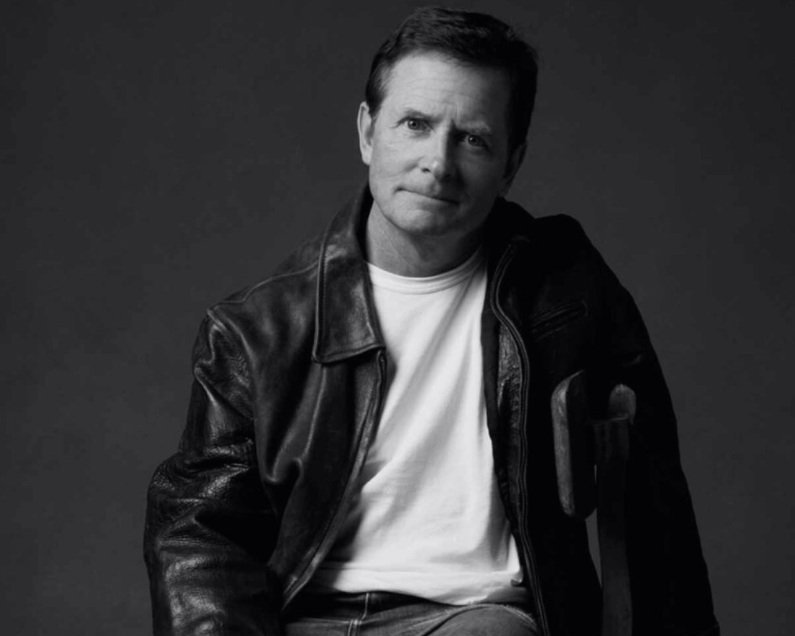
One of the very first things that I did following diagnosis was google Michael J. Fox. I read his books; Lucky Man, Always Looking Up, A Funny Thing Happened on the Way to the Future. His writing is honest, funny, and relatable. I can’t imagine what the PD world looked like before he brought it to the forefront. He has since emerged as a heroic person in my life, one who I follow and admire. But he’s a pretty busy guy so this relationship is understandably a one-way thing of course!

Then, I discovered that facebook and twitter had Parkinson’s groups. Forums for people like me to engage in discussions about the ridiculous, and seemingly endless, number of issues involved with PD. Now I have connections, all over the world, that can answer questions, suggest solutions, share their struggles, challenges, and accomplishments, and offer knowledgable and empathetic support.

I follow their personal blogs – just like this one – and learn about their journeys. I read their posts and offer support where I can. I hear about their good days, and their not so good days. And they do the same for me. These connections have made my PD world smaller and more intimate.

In fact, my heroes have come to be PWP (people with Parkinson’s) that I’ve gotten to know through social media. They are people who build awareness of PD through their willingness to share the good, the bad, and the ugly. They are the super cool neurologists and researchers that are forging a path to creating a better life with PD and eventually a life without PD at all. I cannot even begin to tell you the excitement that I feel when I get ā€˜followed’, ā€˜friended’, or ā€˜liked’ by a neurologist, or an author of a book that I have read, or one of the many ā€˜famous’ PWP that I have come to know. These people have become like rockstars in my world!

Yesterday I watched live as Jimmy Choi attempted to break another Guinness World Record while raising funds for Team Fox. Last week I finished reading Ending Parkinson’s Disease by Dr. Ray Dorsey, Dr. Todd Sherer, Dr. Michael Okun, and Dr. Bastiaan Bloem. This morning I joined in on some conversations on SLTPD (Start Living Today PD) on Facebook. This afternoon I will try to listen in on @djclaire, from Twitter, on @radioparkies in the UK (but the time difference is a killer).

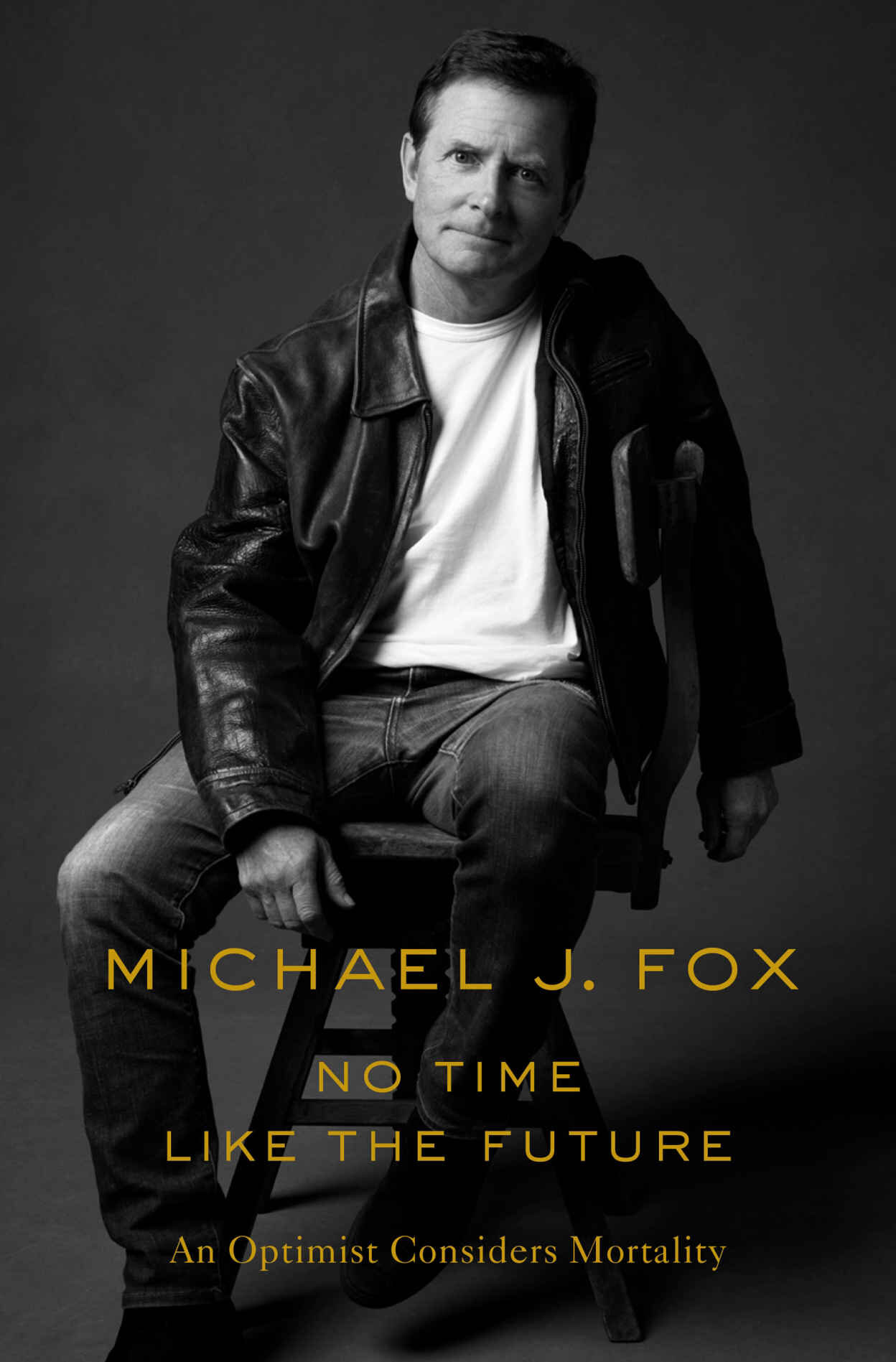
And tomorrow I look forward, with tremendous anticipation, to receiving my copy of Michael J. Fox’s newest book; No Time Like the Future.

654106874.jpg

Ā 

Ā 

Ā 

Ā 

Ā 

An Apple a Day

And that’s about how long it takes to peel one!

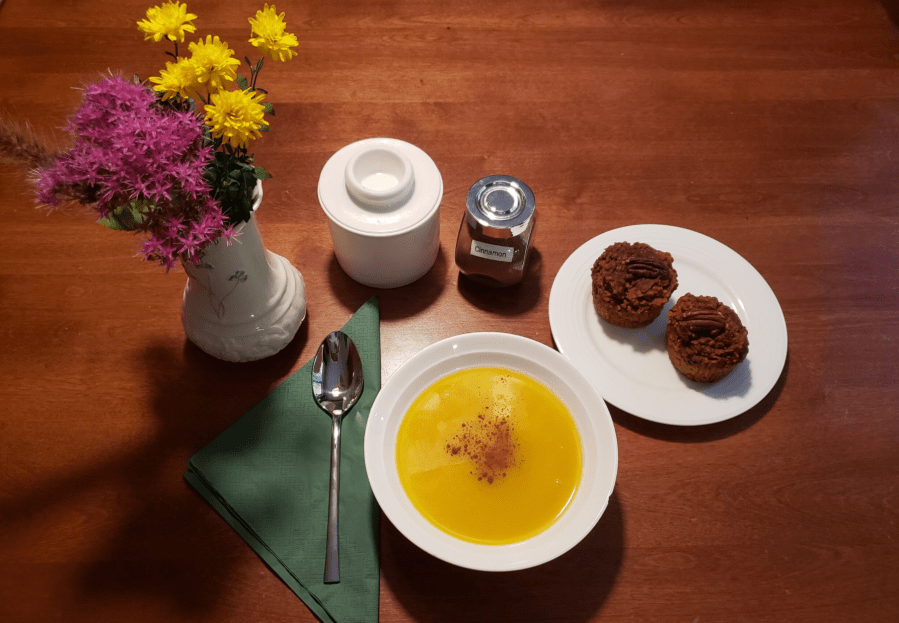
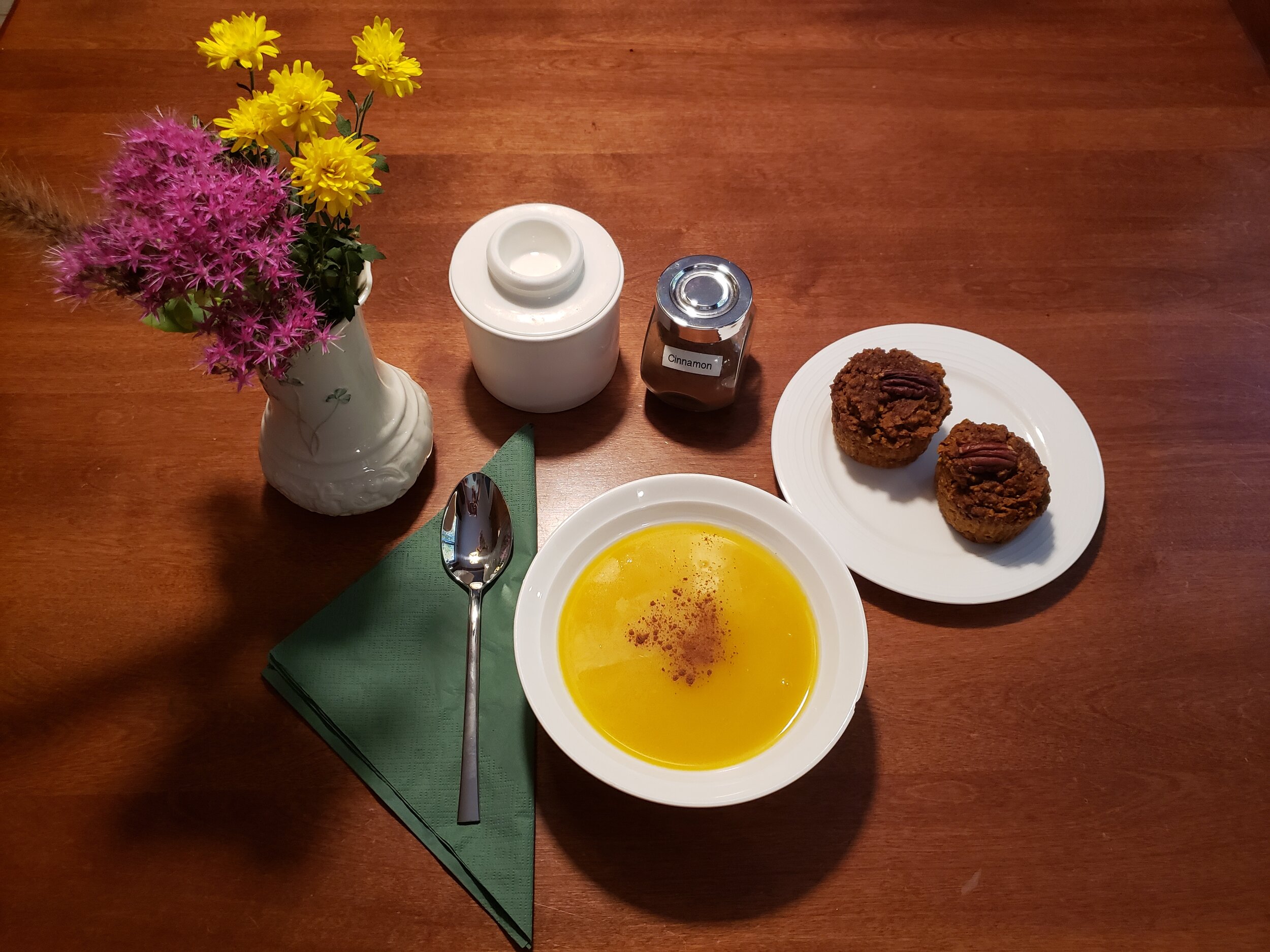
With this beautiful season comes trips to the Pumpkin Patch and the Apple Orchard and yummy fall baking. Two favourite recipes I like to make at this time of year are Roasted Squash Soup and Pumpkin Spice Muffins. Both of these call for peeled apples.

While peeling an apple is something most people do mindlessly and effortlessly, for me, this is a most dreaded task.

Parkinson’s Disease is a movement disorder that can impact coordination. Some activities that require my hands to do two different things at the same time (ie. peeling an apple) are extremely frustrating to do. It is both a physical challenge and a mental challenge. My brain has to focus intently on making my fingers/hands move correctly and my whole body seems to get involved in supporting the muscles in my hands! My shoulders, neck & back are exhausted by the time I’ve finished the job.

Isn’t that ridiculous?

If it’s not a ā€˜good’ day, I’ll sometimes ask for help. But I think this is something I need to keep doing. Use it or lose it!

But it is certainly worth it! Great soup and healthy muffins!


20201019_093943.jpg

Ā 

Ā 

Ā 

The Earliest Sign

Uncovering my history of Hyposmia!

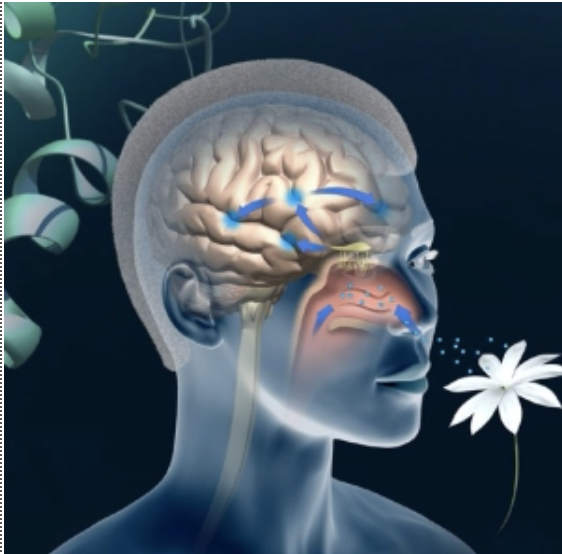
One of the earliest signs that something might be amiss with your dopamine levels, is the complete or partial loss of the sense of smell. This is called Hyposmia. (This is also one of the early signs of COVID-19 and quite honestly, the relationship scares me! Why covid-19 makes people lose their sense of smell)

I have written about this before in Stop and See the Roses and acknowledged that looking back, this one of my earliest symptoms.

Well, I found out just how EARLY this sign appeared!

As I was looking at old movies from over a decade ago (which was so much fun!), I came upon a moment where my son brought me a flower from the garden to smell. I attempted to smell and my reply was;

ā€œI have a very weak sense of smell because I can’t smell that.ā€

The date on the film was July…2009.

I was diagnosed in May…2017.

Wow. I’m not sure if anything would be different now if I had pursued a doctor’s visit because I couldn’t smell the flowers, but researchers are now doing a lot of work around early diagnosis based upon loss of/impaired smell.

Loss of Smell in Parkinson’s Research

Loss of Smell and PD

Uncovering this little gem from my history is just a fragment of the complex puzzle of Parkinson’s Disease.


https://scienceandfooducla.wordpress.com/tag/hyposmia/
Ā 

The Perfect Day

“It is not the mountain we conquer, but ourselves” –Ā Sir Edmund Hillary.

Things have been a little rough for my body lately and a week ago I received the results from my bone scan which confirmed a stress fracture in my right fibula (outer bone in lower leg).

Major disappointment. Minor shock.

The bone is healing well and with a soft brace, I am walking again. Sadly, I believe my running days are over – but let’s not go there just yet. Meds are prescribed for osteoporosis and another bone density screening is in the works.

When the doctor called me, I happened to be on a family camping trip in Algonquin Park. I was determined not to let this get me down so, after a morning canoe adventure, I convinced my son Rob to go on what I thought was a short 2km hike. At the trailhead, we soon realized that this was in fact an 8km hike with significant elevation!! We headed off thinking we would do what we could and turn around if needed.

As we are both a little competitive, turning around was never really an option…especially with the promise of a lookout at the halfway mark. Spectacular scenery, stunning waterfalls, and some difficult terrain made for an unforgettable trek, and the lookout did not disappoint.

Although we didn’t have the foresight to bring water or snacks or bug spray, I did remember to wear my ankle brace and good shoes! And despite the worry I had over this being too much for my ankle, I relished in the quality time spent with Rob in such an incredible forest.

We did it! And everything worked. It was the perfect day!

117649314_10157255580481776_7868871088009872187_o.jpg

Ā 

Ā 

Ā 

Feelin’ Groovy

“Slow down, you move too fast” – Simon & Garfunkle

I feel better!

The last few weeks were rough, (Days Like These), but I’m feeling better. Ankle has healed, damaged rib cage is back to normal after a paddleboarding mishap. Waiting for Bone scan results.

After a long rest, healing has been able to occur!

Like the song says (see below); ā€œSlow down, you move too fast.ā€

Maybe I was.

So I will slow down…a little bit…just to avoid any further injuries/setbacks.

Glad to be on the other side!


4766bebafd69438d76984c11ff1718b5.jpg

Ā